36 Hour Media Fast

I started my media fast in the middle of Sunday and carried it over into Monday as that was the best chance I had at avoiding most media. Not watching Tv or movies was easy but music was another story.  I instantly felt the need to listen to music but knew I couldn’t. I attempted sleep and found it difficult which is almost always the case but without music my mind wandered more and I felt less control of my thoughts. Music I’m not even sure exists was blasting in my head and it freaked me out a little. Eventually I fell asleep and had a long and strange dream. I woke up and laid in silence for a while. When I went back to sleep I had nightmares and woke up more often than usual although I wouldn’t say it was necessarily due to the lack of music.

I woke up later than planned Monday morning due to the lack of sleep I had gotten and didn’t feel the need to take my phone off airplane mode or bring it in the bathroom with me because I couldn’t listen to music which helps me keep track of time. I was then late to class because I lost track of time (saw that coming) and appeared as tired as I felt when I arrived. At this point any contact with media had been just overhearing music or passing a TV.  Social media sites did not prove a challenge for me until around 2pm. The problem there was that many people communicate to me through Snapchat and Instagram and Facebook posts keep me updated on what is happening in the school clubs I’m involved in. After a couple more hours I started checking the posts and answering messages. I also started seeing articles my phone was trying to show me under the assumption I would click on them out of interest. Three article headlines did actually intrigue me so I took a screenshot of them to remember for later.

I later got in my friend’s car to go do laundry with him and since he knew I had a rough night he decided to play songs we both like to cheer me up and it wasn’t until one had already finished that I realized I still wasn’t suppose to consume music. We kept playing music however and I realized that my approach to this task was more stubborn than monastic. While I could easily avoid most forms of media and conversations about it I couldn’t avoid music. It is apparent that I use music to help me control my thoughts when not focused on a task and to help me heal when I am sad and to sooth me when I am upset. Music has become an emotional support system for me but I wondered after this if it is starting to hinder my ability to cope on my own.

The Stress Of Fall Finals

By Maribel Bermudez

Dec. 10, 2018

Stress levels are high amongst Ithaca College students. Finals week is quickly approaching. Some students can be found pulling frequent all nighters at the library to keep up with their course work and prepare for finals. The fall semester gets colder as time goes by and days get darker earlier. For some this change in the environment is no problem. For others it makes an already stressful time even harder to get through.

“It’s really hard to motivate yourself to walk through all that snow to get where you need to go,” said Carly Williams, a senior at Ithaca College. Her assignments for finals include making paintings and a film. She said she use to wake up early with panic around midterms and finals when she had papers to turn in instead of projects. Finals are still a stressful time for her and she hasn’t seen any resources other than flyers offering massages and a day set aside where Guiding Eyes for the Blind brings dogs that students can pet to destress. She said that one problem with these events is that they require students scheduling time around them which can make the day harder for students rather than less stressful.

“They have a couple of fine ideas but the problem is that they’re at the expense of inconveniencing students rather than making it easier on students,” said Devon Baris. During his senior year of high school Baris found out that he is prone to seasonal depression. When he felt the need to go to Ithaca’s Center for Counseling and Psychological Services , also known as CAPS, he found the waitlist to be too long and never came back. Baris graduated from Ithaca last year but he can still remember the stress that came with finals. On one finals week he had spent 10 hours writing a paper for 3 consecutive days.  Baris said that being a part of circus club helped him get through finals but that at that time circus club would be part of an event called Destress Fest which only drew in a few students. Baris said he only knew about the event because the circus club volunteered to be part of it.

Screen Shot 2018-12-11 at 9.04.55 PMBaris leaping over fellow Circus club members.
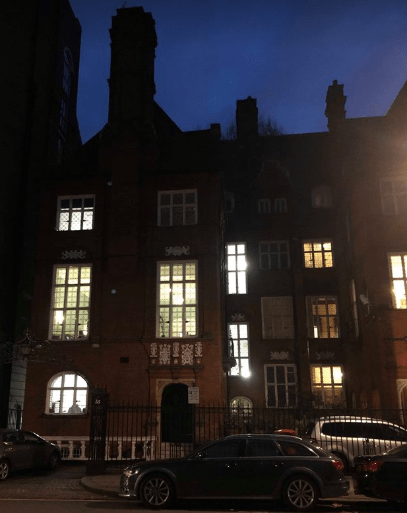
“There’s a lot of complaints about CAPS and how they’re barely available,” said Olivia Weise, a junior at Ithaca. She said that while the college does a good job of making students aware of CAPS and other resources, they should consider temporarily hiring more therapists  around the time of finals. Weise is currently studying at Ithaca’s London Center. When studying abroad the process of getting help works differently.

Screen Shot 2018-12-11 at 9.08.45 PM.png                               Photo of Ithaca’s London Center Provided by Weise.
“There’s no CAPS or medical center,” said Weise,”They refer you to a psychiatrist within London or refer you to other sorts of professional help if you need it through the free student international insurance.” Weise hasn’t had to utilize the insurance yet but she said she could see the process of finding places that take the insurance as an added stressor for an already struggling student. However CAPS does offer remote counseling if students reach out to them while abroad.

Junior Michaela Jackson has had a positive experience with the services CAPS provides. She has utilized their sunroom area where sun lamps help those being negatively affected by the change in weather. She has also been to their Anxiety Toolbox workshops which happen every Monday.  From this workshop she learned some tips to keep her stress under control. She is also aware that some of the clubs on campus offer events to help students destress. She said the college itself should be providing more help for stressed out students.

“Overall I feel like IC should implement some different programs to help students, especially during finals,” said Jackson.


Stress Eating

According to the American Psychological Association’s Stress in America survey, twenty seven percent of adults stress eat. If I were to take this survey I would definitely be part of that percentage. I often joke around with friends that I need something sweet to distract me from how bitter the day has been. Stress eating, also known as emotional eating, is no laughing matter as it can lead to weight gain and push people towards obesity.

Why does stress make us want to eat so much? Long term stress causes the adrenal glands in your body to release cortisol. Cortisol is a hormone that increases appetite. Increased stressed leads to increased cortisol which means an increase in the amount of food you’re putting in your stomach. Perhaps this wouldn’t be so bad if stressed caused us to crave foods like celery and peanut butter but unfortunately that is typically not the case. Stress eating is likely to be the consumption of sugary foods. It can also mean knocking back a few alcoholic drinks.

Stress can also cause you to exercise less so you intake more calories but don’t do much to burn them. It is also possible that stress causes you to skip meals and as a result when you do eat, you eat too much. Many people feel worse or disappointed in themselves after stress eating because they know they’ve eaten too much and very unhealthily. Stress eating also makes dieting harder and overtime all those calories take a toll on your body and that may lead to even more stress.

Aside from learning how to cope with your stress in general, there are ways to stress eat less often. The first step to decreasing your chances of eating too much is recognizing that you are craving comfort food and not actually hungry. If you are craving nothing but sweets and it’s been a hard day then you know that you’re not actually hungry, your body just wants to stress eat. It’s also important to remember that you may feel like eating just because you’re bored.

You can try substituting junk food with fruit. Instead of a donut you can eat grapes or pineapple to satisfy the craving for something sweet. You should also try to tend to your stress another way once you realize you want to stress eat. You can go to the gym or talk to friends as an alternative so long as that conversation with friends doesn’t end with going out to eat. Once you learn to recognize what causes you to stress eat and if you feel like stress eating you can work towards replacing that habit with a healthier one.


Self Talk and Being Patient With Yourself

Patience is a virtue. We’ve all heard it. Many of us try our best to be patient with others in our lives. There may even be some people in our lives that we have a seemingly endless amount of patience for. Oddly enough you can have patience for the whole world but not when it comes to yourself.

One problem that often arises when people don’t have patience with themselves is that it leads to negative self talk. Maybe you had a presentation and you practiced all week but when it came time to present you got nervous and stuttered and forgot at times what you were saying. This isn’t exactly great for one’s confidence but it can be even more harmful if the person starts verbally bashing themselves as a result. If the person has had a problem giving presentations before they may tell themselves that they’re incompetent or never do anything right or that they should do themselves a favor and never talk again.

The best response with that scenario would be to make note of what went well, what didn’t, and what can be done to improve your public speaking skills.  Unfortunately  when people bash themselves they may not even get to that approach. They’ve torn themselves down and then do nothing to grow from the situation. They weren’t patient with themselves so they didn’t even bother looking at what went right.

Of course you can use positive talk to boost your confidence before performing a task you’re nervous about. It’s good to be able to be your own hype man but positive self talk isn’t just telling yourself you’re great and moving on. Positive self talk is also telling yourself that even though you are struggling with something in your life you will work to find a way to overcome it because you know you’re capable. The next step would be to actually work on finding ways to overcome whatever obstacle is in your way. Positive self talk isn’t very beneficial if you lie to yourself about having intentions to do better.

Some who struggle with positive self talk may look to an NLP Practitioner to help change that. NLP stands for neuro linguistic programming and NLP Practitioners try to change the way your brain is programmed by changing the way you talk about things including yourself. There is some contraversy about just how much an NLP Practitioner can do for you but there is evidence that how you talk about things affects how you perceive situations and if you can grow from them. Negative self talk hinders you from bettering yourself. When talking to yourself you should treat yourself the way you would treat a friend. This should help you use less severe words and display patience for yourself. You can also look at the situation as if you were not involved in it and are just observing it. There are a number of methods to help improve self talk for those who struggle with speaking positively about themselves but none of them are overnight solutions.  Making this change takes work but is very beneficial in the long run.

Ithaca Men’s Rugby Team Return to Nationals

By Maribel Bermudez

Nov. 22, 2018

LET’S GO ITHACA! RUN!

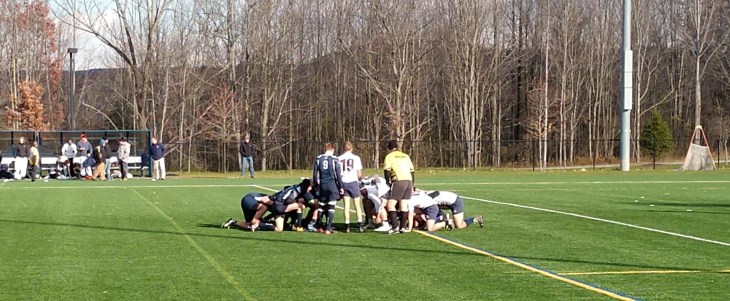
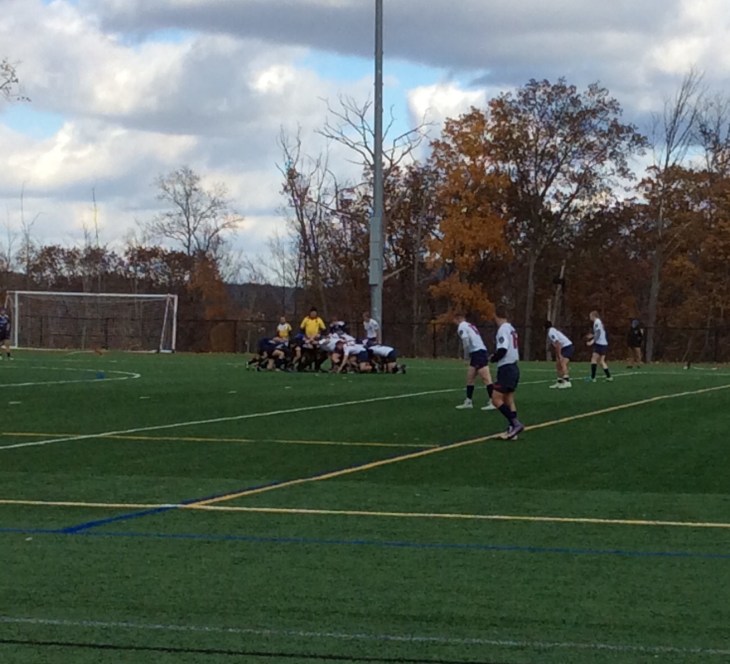
These words, along with rugby related chants and cheering on of specific players could be heard from the Higgins field bleachers of Ithaca College on November 10th when the men’s rugby team played against SUNY Maritime. It was windy and the warmest it would get that day was in the low 40s but that didn’t stop fans of Ithaca and Maritime from coming to see their teams compete in NSCRO nationals. For the Ithaca Bombers making it to nationals was important. It had been two years since they made it this far. The Bombers would go on to beat Maritime 44 to 17, an improvement from their 60 to 26 loss to Tufts college in their first round of the 2016 NSCRO Nationals.

“This playoff tournament started with just our division,” said Mark Hasset, president of the men’s club rugby team. Hasset explained that as the tournament progressed the Bombers have gone from facing the teams they usually would during the regular season to playing teams from the entire north east region.

IMG_20181110_141702376

Ithaca and Maritime form a scrum to win possession of the ball.

“It’s very similar to playoff college basketball,” said Andrew Mele, the forward captain of the team. He said the top 16 teams play within their area and the top four teams from there would then compete against each other in Florida.

Both Hasset and Mele were proud of the size of the men’s rugby team this season and the retention of many new players. The Bombers have around 60 players. Mele said that it was good to see that newer players were ready to step in whenever more experienced players suffered an injury. Their ability to do so meant injuries were not as much of a set back for the team as they could have been and has helped the team make it farther than they did the past two seasons.

FullSizeRender

Ithaca and Maritime form a scrum.

The National Small College Rugby Organization, known as NSCRO, is a fairly new organization. It was created in 2007 with the aim of helping develop and organize the rugby teams of division 3 and 4 colleges. Over 200 men’s teams compete for the NSCRO Small College National Championship.  Ithaca was one of eight teams that competed in the northeast region qualifier games and their win over Maritime got them into the Region Championship where they faced Salve Regina college and Monroe college. Ithaca lost to Salve Regina 31 to 42 and beat Monroe college 43 to 25, landing the Bombers in third place.

Despite not making it all the way through, the Bombers have certainly showed improvement in their return to nationals.


Students Vote for Dracula

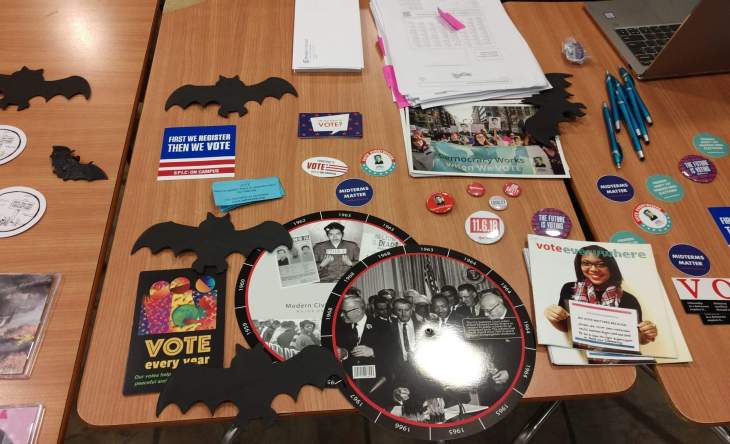
On October 27th Ithaca College’s Macabre Theatre Ensemble held a benefit concert to raise money for the Andrew Goodman Foundation. The Andrew Goodman Foundation encourages young citizens to vote and be heard. They also help with voter accessibility. Being both the artistic director for Macabre Theater Ensemble and a campus ambassador for the Andrew Goodman Foundation, Alexandria Paul decided to combine the two in one event.

“Vote for Dracula is part of our benefit concert series in which we pick a charity and throw a concert with all students bands”, said Paul. She said that Macabre Theatre Ensemble have been throwing benefit concerts for two years. “We’ve done seven or eight concerts, all for different charities.” Paul explained that since the Andrew Goodman Foundation stresses that young people get out and vote and the midterm elections are coming up soon, Macabre Theatre Ensemble should have a benefit concert for the foundation.

The concert took place at the IC square and featured three bands. Tungsten Lungs performed first and was followed by Leonardo Decapitated and Nick Wayne and the Bat Seeds. The music leaned more towards the sound of punk and at one point the bands were asked to turn the music down but that didn’t stop the event or discourage the bands from performing. Students could donate money, buy Macabre themed stickers, and ask Alexandria Paul voting related questions.

received_1839153939539375

“I don’t think voting is the end all be all of your civic duty,” Jake Sullivan explained. As concert chair for Macabre Theatre Ensemble, Sullivan has been a part of their benefit concerts both behind the scenes and on the stage. For this concert, Sullivan was the guitarist in Nick Wayne and the Bat Seeds and although their lead singer jokingly shouted, “Don’t bloody vote,” during their set, Sullivan said that voting is important but continuing to fight for the causes you believe in no matter the outcome of the election is what’s most important.

A Glimpse Into Music and Your Brain

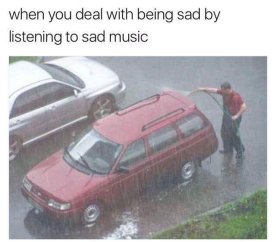
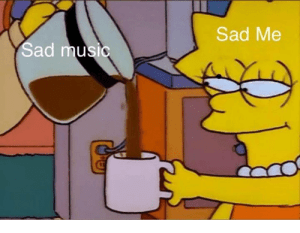
I often poke fun at myself for frequently choosing to listen to sad music when I am already feeling sad. So basically these memes are me.                                                      gY2B76r   sad-me-sad-music-30399116                     But it turns out that listening to sad music can help make you feel a little better. A study published in Scientific Reports found that, “sad music can induce a pleasurable feeling”, which means you may be getting something positive from what most would view as a negative experience. Here’s the link if you want to look into it some more: https://www.nature.com/articles/srep46063

Music doesn’t just sooth you when you’re sad. Music can increase your dopamine levels and help you remember moments better. Music is currently being used to help Alzheimer’s patients. Playing songs that were popular when they were growing up or tied to a significant moment at some point in their life has been known to help trigger their memory. Often times you can see a physical response from patients because they are remembering what they could not without music.

Singing along to your favorite songs can also lower your stress levels. Singing releases endorphins and oxytocin. Releasing these hormones helps you feel better similar to how exercising typically makes people feel better by causing your body to release endorphins. So if you’re stressed out and have a minute to listen to your favorite songs or sing along to a song, go for it. You’ll most likely feel better afterwards.


Here’s another article to checkout regarding music and your brain if you want to know what else music can do for you :  http://ideas.time.com/2013/08/16/singing-changes-your-brain/


Gut Health? What About It?

So I’m sure we all know the deal by now. You ask some super toned or muscular person how they got so fit and they mention how dieting is a large part of it. It’s not hard to link your bodies health to the foods you eat. But what about your brain? Dr. James Farley is a neuroscientist that helps patients with thyroid issues and other chronic health issues. You only have to interview him once to know he’s a big believer in gut health. I learned from him that what you eat 30 minutes before bed and within 30 minutes of waking up has a large impact on your blood sugar levels which in turn impact your sleep. Ok ok, no sleep makes us miserable, we know. But have you looked into what nutrient deficiencies can do to your mental health?

I was in the process of asking Daymond Sewall for an interview when he asked me to read something first and then sent me a link. So let me explain a few things about Daymond Sewall. He’s a definition specialist and he is shredded. He authored the book Shredded Executive, has a large following on Facebook, instagram, and twitter, and has been a personal coach to many. He also runs his own gym. Fitness is his livelihood. But it’s not lifting weights that he stresses the most. It’s eating healthy and tracking the macros of what you eat.

So back to the link Sewall sent. It’s a blog post. I see Doug Cook, RDN The Gut Brain Guy and below that the title to the post. The title, 9 Nutrient Deficiencies That Can Cause Depression, made me go oh no. Nine nutrients? NINE! I thought it was just four! I knew about lack of vitamin D or iron or magnesium or B vitamins contributing to depression but it turns out if you’re low on iodine, zinc, selenium, omega-3 fats, and EPA then you’re running the risk of worsening your depression. You may even be developing depression because your diet lacks a few of these nine nutrients.  Some of these help your thyroid function properly, some decrease inflammation in your body, some help make your metabolism work properly, and if your thyroid isn’t working properly or your metabolism or you have inflammation in your body then it sets off a chain of events that end up damaging your brain which of course hurts your mental health. The good news is there are supplements for most of these nutrients. Now I just need to look into which brands are the real deal, and which aren’t.

Poor Sleep, Poor Health

  In 2017 The Observer released an article titled “Sleep should be prescribed”: what those late nights out could be costing you. In the article, sleep scientist Matthew Walker explained the  harmful effects of lack of sleep. Killer cells attack the cancer cells in your body and after a night of under six hours sleep, these cells drop by 70 percent. Just one bad night of sleep has already increased your chances of getting cancer. Driving after a night of less than five hours of sleep makes you 4.3 times more likely to crash. Many nights of little to no sleep is linked to cancer, Alzheimer’s disease, diabetes, obesity and poor mental health. Sleep is a necessity for survival. So why do so many of us have trouble sleeping?

Walker cites light and technology in the article as reasons we can’t sleep and also said anxiety “plays a part,” because as a society we are, “lonelier, more depressed.” Alcohol and caffeine also negatively impact sleep. As it turns out, a lot of what you eat and when you eat it impacts sleep. Inadequate sleep decreases leptin, which tells your body you are full, and increases ghrelin which tells your body you are hungry.

Dr. Farley runs the Farley Neuro-Biomedicine Health System. Part of how he helps clients is by telling them what they should and shouldn’t be eating and how that helps their health. He stresses eating six times a day and having a meal 30 minutes before you go to sleep and within 30 minutes of waking up to fight blood sugar spikes.

“All of your neurotransmitters are dependent on stable blood sugar,” said Farley. When you don’t eat before bed and soon after waking up, you make your blood sugar unstable. This leads to your body releasing cortisol, the stress hormone. Cortisol going up means melatonin going down. Low melatonin means a hard time falling asleep.

“Lack of sleep is a major physical stressor,” said Farley, “Every cell in your body can only heal when you shut down the system and you sleep.”

A person needs four to five 90 minute sleep cycles to achieve all the benefits of sleep. Not sleeping properly, not eating properly, and spikes in blood sugar are all stressors on the body. All three are weakening your body at once. Fixing your sleep may not be as simple as setting a bedtime routine and sticking to it. You may need a meal routine as well. Dr. Farley explained that the meal you eat before going to sleep should not be a carbohydrate and to stay away from fruit before bed. Instead, eat proteins. Snacks such as peanut butter on celery are better to eat before bed.

“Your sleep will influence your ability to manage life because if you’re not getting enough sleep it acts as a physical stressor on you and it breaks you down,”said Farley. According to Farley, lack of sleep is “almost as damaging as major mental emotional stress.”

Professor Shamsi Monfared teaches in Ithaca College’s department of exercise and sport sciences. She said that when an athlete has trouble sleeping, their mental coaches may teach athletes to reframe their perception and consider competing through lack of sleep as a challenge. But when lack of sleep is chronic, there are physiological and cognitive repercussions like fatigue and mental exhaustion.

“Lack of sleep could hurt their cognitive skills, for example anticipation, decision making, working memory and attention,” said Monfared. This isn’t just exclusive to athletes, however. The average person’s cognitive skills, whether they are active or not, faces the same consequences.


The News Is In Everyone’s Hands

While reading Mobile And Social Media Journalism it occurred to me that at points the book stressed the difference between consumer’s shared interests and content and what is actually news. User generated content is important but those working in the newsrooms are still the gatekeepers. We have adjusted to how consumers want to get their news which meant turning to the mobile first approach and trying to make the news we share with consumers engaging through means such as interactive videos and constantly being accessible and consistent through social media accounts and making ourselves approachable. As I read this book I wonder if catering to consumers so much has been detrimental to the purpose of news. Has the definition of what news is changed along with how it is shared?

As journalists we are expected to tell people what is newsworthy but now that we must compete for clicks I wonder if I will ever find myself writing a story that’s purely click bait and actually being ok with that. Technology gives us the ability to immerse viewers and listeners in the stories we’re sharing but it also has a way of desensitizing us and distracting us from what is important. As I continue to read this book I will look for ways to influence my audience as well as cater to them.